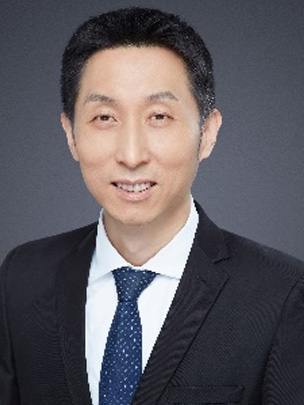
Prof. Long Wang Peking University, China Changjiang Scholar, Distinguished Young Scholar, National-Level Leading Talent |
Long Wang is a professor and doctoral supervisor at Peking University. He received his Ph.D. from Peking University in 1992. He subsequently conducted postdoctoral research at the University of Toronto in 1993, and from 1995 to 1997, he worked as a Humboldt Research Fellow at the German Aerospace Center (DLR). He is a recipient of the "Changjiang Scholar" distinction, a National Science Fund for Distinguished Young Scholars, and has been selected for the "New Century National Hundred, Thousand and Ten Thousand Talent Project". His research focuses on intelligent control of complex systems, analysis and synthesis of networked control systems, swarm behavior and collective intelligence, as well as evolutionary game theory and group decision-making . Prof. Wang has received numerous prestigious awards, including the National Natural Science Award (1999, 2017), the First Prize for Science and Technology Progress from the State Education Commission, the First Prize for Natural Science from the Ministry of Education, and the First Guan Zhaozhi Control Theory Award. He serves as the Director of the Center for Systems and Control and the Director of the Intelligent Control Laboratory at Peking University. His editorial roles include Editor-in-Chief of the International Journal of Information and Systems Science and Editor in Robotics and Control for the Springer Journal of Mechanical Science and Technology. |
Prof. Youmin Zhang Concordia University, Canada IEEE Fellow, CSME Fellow |
Dr. Youmin Zhang is a distinguished professor at the Department of Mechanical, Industrial, and Aerospace Engineering (MIAE) and Concordia Institute of Aerospace Design and Innovation (CIADI) of Concordia University in Canada, holding the professional qualification of P.Eng. (Ontario). He is a Fellow of the Institute of Electrical and Electronics Engineers (IEEE) and a Fellow of the Canadian Society for Mechanical Engineering (CSME), as well as a Senior Member of the American Institute of Aeronautics and Astronautics (AIAA), and a Member of the American Society of Mechanical Engineers (ASME), Canadian Aeronautics and Space Institute (CASI), and Association for Unmanned Vehicle Systems International/USC (AUVSI/USC). Leading the Diagnosis, Flight Control & Simulation (DFCS) Lab and Networked Autonomous Vehicles (NAV) Lab, Dr. Zhang has long been dedicated to cutting-edge research in fault diagnosis and fault-tolerant control in the aerospace field, as well as guidance, navigation, control and cooperative control of unmanned systems (UAVs, UGVs, etc.). He has also extended signal processing and sensor fusion technologies to a wide range of practical applications including forest fire monitoring and detection, pipeline leak detection, and monitoring and self-healing control of renewable energy resources and smart grids. His groundbreaking research outcomes on UAV-based forest fire monitoring have been widely covered by prestigious media outlets worldwide, such as the Canadian Science Publishing Blog, CTV News Channel, Radio-Canada International and La Presse. Boasting profound academic influence, his review paper on fault-tolerant control ranked among the top 10 most cited articles in a renowned international journal. He is an active and pivotal figure in the global academic community, having organized and chaired numerous top-tier international conferences in aerospace and unmanned systems including ICUAS and ICIUS, delivered plenary and semi-plenary talks, and offered specialized tutorial workshops at major international academic events. Dr. Zhang consistently recruits outstanding candidates for MASc and PhD programs, and also hosts postdoctoral research fellows, conducting in-depth academic research and cooperation in the fields of unmanned systems, aerospace control, and intelligent monitoring. |
Prof. Xiwang Dong Beihang University, China National-Level Leading Talent, Dean of Unmanned Systems Research Institute |
Xiwang Dong is a Professor and Doctoral Supervisor at Beihang University, where he serves as the Dean of the Institute of Unmanned Systems and the Executive Associate Dean of the School of Artificial Intelligence. He is a recipient of the National High-Level Young Talent Program and the National Outstanding Youth Science Fund. He received his Ph.D. from Tsinghua University in 2014 and conducted postdoctoral research at Nanyang Technological University, Singapore. His research interests focus on swarm intelligence, cooperative control and guidance, and unmanned aerial vehicle (UAV) swarm systems. He has published over 100 papers as the first or corresponding author in top journals such as IEEE Transactions on Automatic Control and Automatica, with over 8,000 citations. He has been recognized as a Highly Cited Chinese Researcher and among the world’s top 2% of scientists. He has authored five monographs and holds over 80 national invention patents. His honors include the First Prize for Natural Science from the Chinese Association of Automation and the Wu Wenjun Outstanding Youth Award in Artificial Intelligence. He serves as an Associate Editor for several international journals, including IEEE Transactions on Cybernetics. |
Prof. Hao Fang Beijing Institute of Technology, China Second-Class National Natural Science Award Winner, National-Level Leading Talent |
Hao Fang is a Professor and Doctoral Supervisor at the School of Automation, Beijing Institute of Technology (BIT). He received his Ph.D. from Xi‘an Jiaotong University in 2002. Subsequently, he conducted postdoctoral research at INRIA-Sophia Antipolis in France and the CNRS LASMEA Laboratory at Blaise Pascal University, France. He joined BIT in 2005 and has been a full professor since 2011. His research interests include multi-agent cooperative control, intelligent mobile robots, and distributed collaborative SLAM . Prof. Fang has led numerous major research projects, including key programs and general programs of the National Natural Science Foundation of China. He has published extensively in top journals such as IEEE Transactions on Automatic Control, Automatica, and IEEE Transactions on Cybernetics. He is a recipient of the second-class National Natural Science Award (2014) and a first-class award from the Ministry of Education. He currently serves as an Associate Editor for Control Theory and Applications and an editorial board member for Unmanned Systems. |
Prof. Huiping Li |
Huiping Li is a professor and doctoral supervisor at the School of Marine Science and Technology, Northwestern Polytechnical University (NPU). He received his bachelor's and master's degrees from NPU in 2006 and 2009, respectively, and earned his Ph.D. degree from the University of Victoria, Canada, in 2013. He conducted postdoctoral research at the University of Victoria from May to October 2013 and joined the faculty of NPU in November 2013, where he has served as associate professor and professor. He is a recipient of the National Excellent Young Scientist Fund, the Shaanxi Provincial Outstanding Youth Science Foundation, and has been selected as a Shaanxi Provincial Young Science and Technology Rising Star . His research interests primarily focus on model predictive control, intelligent decision-making and optimization control for unmanned systems, underwater vehicle navigation, and multi-agent cooperative control . Professor Li has led and participated in numerous research projects, including those supported by the National Natural Science Foundation of China and the Shaanxi Provincial Science and Technology Department . He has published over 50 papers in top-tier journals such as Automatica, IEEE Transactions on Automatic Control, and Systems & Control Letters, and has authored two academic monographs published by Springer . He has received the First Prize in Natural Science from the Chinese Association of Automation and two First Prizes in Science and Technology from the Shaanxi Provincial Department of Education . He serves as an associate editor for several prestigious international journals, including IEEE Transactions on Industrial Electronics, IEEE Transactions on Industrial Informatics, and ASME Journal of Dynamic Systems, Measurement and Control. |
Prof. Hesuan Hu Xidian University, China National-Level Young Talent |
HeSuan Hu (Senior Member, IEEE) received the BS degree in computer engineering and the MS and PhD degrees in electro-mechanical engineering from Xidian University, Xi’an, China, in 2003, 2005, and 2010, respectively. He is currently a full professor with Xidian University. He is a holder of more than 40 issued and filed patents in his fields of expertise. His current research interests include discrete event systems and their supervisory control techniques, Petri nets, automated manufacturing systems, multimedia streaming systems, autonomous vehicles, cyber security, and artificial intelligence. He has more than 180 publications in journals, book chapters, and conference proceedings in the above areas. He was a recipient of many national and international awards, including the Franklin V. Taylor Memorial Award for Outstanding Papers from the IEEE SMC Society, in 2010 and the finalists of the Best Automation Paper from the IEEE ICRA Society, in 2013, 2016, and 2017. He has been an associate editor of the IEEE Control Systems Magazine, IEEE Robotics and Automation Magazine, IEEE Transactions on Automation Science and Engineering, IEEE Robotics and Automation Letters, and Journal of Intelligent Manufacturing. He is an IEEE distinguished lecturer. |
Prof. Bohui Wang Xi’an Jiaotong University, China National-Level Young Talent |
Bohui Wang isa recipient of the National Young Talent Program and has been recognized as a top 2% globally ranked scientist. He received his Ph.D. from Shanghai Jiao Tong University in 2016 and served as a research fellow at Nanyang Technological University, Singapore, from 2018 to 2023. He is currently a professor at the School of Cyber Science and Engineering, Xi’an Jiaotong University. His research focuses on intelligent computing and the security of cyber-physical systems in clusters. He has led and participated in over 10 research projects, including initiatives supported by the Singapore Development Agency, NXP Semiconductors Sweden, the National Natural Science Foundation of China, and the National Key Research and Development Program. He received the Outstanding Doctoral Dissertation Awards from the Chinese Institute of Electronics and the Chinese Association for Simulation in 2018. He serves as an associate editor for prestigious journals such as IEEE TAES and IEEE SMC. He has published over 80 papers in top international journals and conferences, including IEEE TAC (full paper), Automatica (full paper), CDC, and ACC, and received the IEEE ICIT 2022 Best Paper Award. |